The price of Ming and Qing Dynasty porcelain: understanding the market

A market structured by quality, not by age
Contrary to popular belief, Ming porcelain is not always more expensive than Qing porcelain. The market is based primarily on three criteria: quality of execution, rarity, and state of preservation .
An imperial piece from the Qing period, particularly under Kangxi, Yongzheng or Qianlong, can far surpass a later Ming or provincial production.
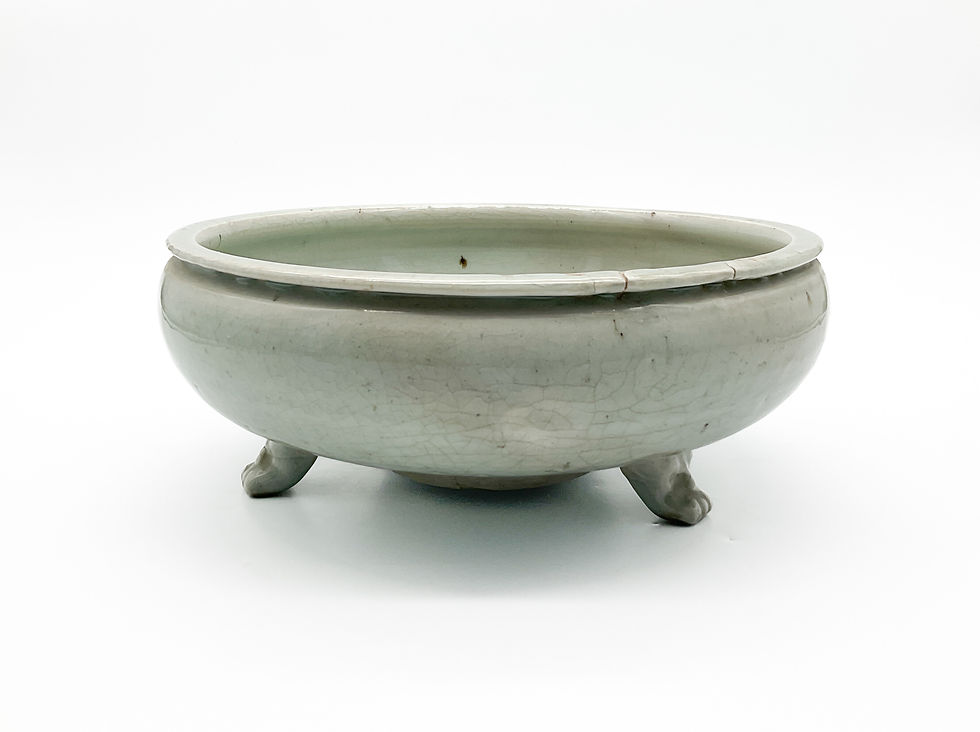
Ming porcelain: a historical reference
Ming dynasty porcelain is among the most iconic on the market, in particular:
The blue and white of the 15th–16th centuries
The productions of the Xuande and Chenghua reigns
Imperial coins with fine and balanced decoration
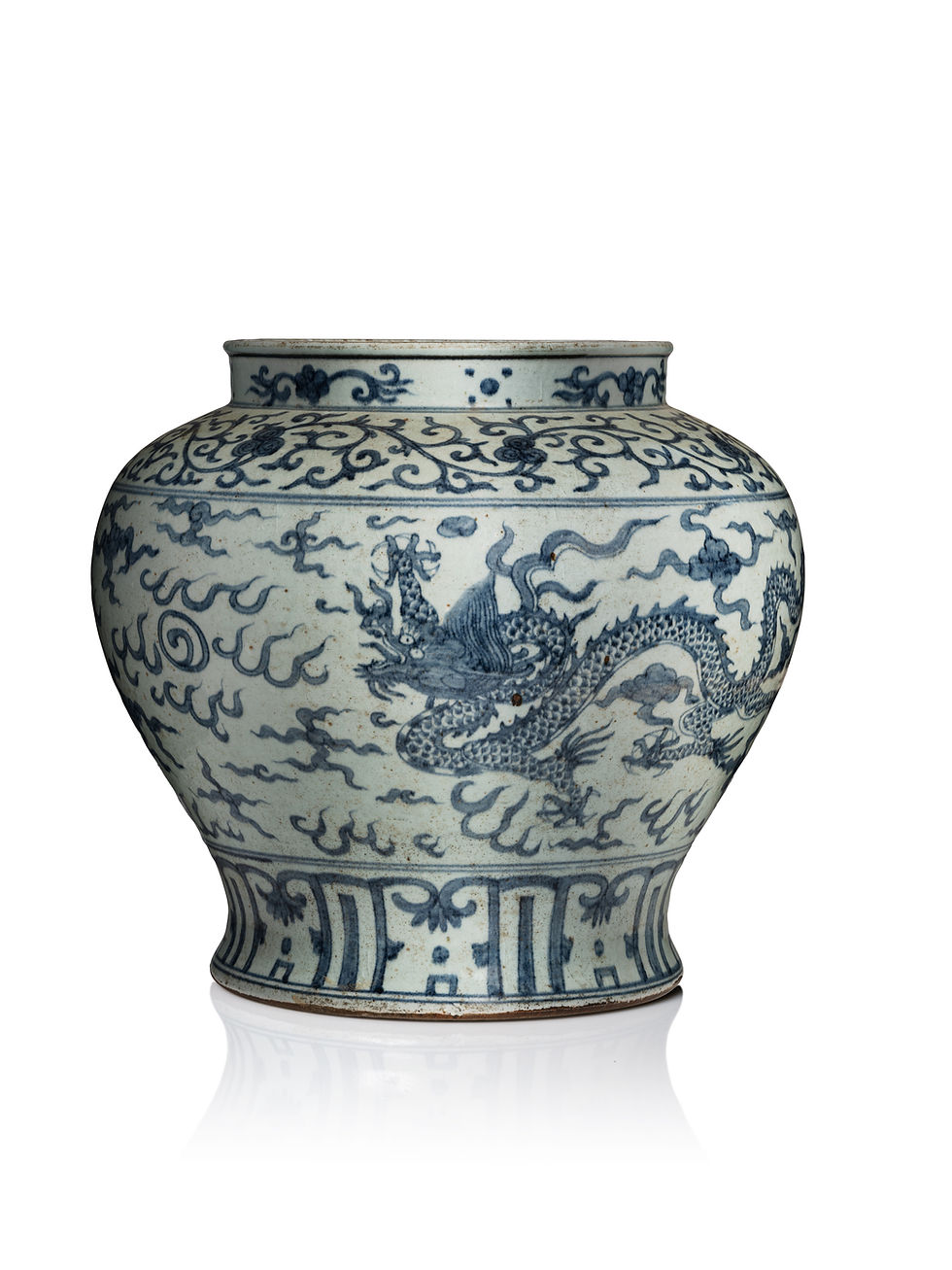
Price orders:
Fragment or small piece: €500 to €3,000
Common decorative item: €5,000 to €30,000
Beautiful, high-quality piece: €30,000 to €150,000
Major imperial coins: worth several hundred thousand to several million euros
The determining factors are:
The quality of cobalt
The precision of the drawing
The balance of forms
The state of preservation
Qing porcelain: a large and hierarchical market
Qing production is much more abundant, with very varied levels of quality.

The main categories include:
The Green Family (Kangxi)
The pink family (Yongzheng, Qianlong)
Imperial porcelains with a brand
Price orders:
Late or regular production: €200 to €2,000
High-quality 18th-century item: €3,000 to €15,000
Imperial quality piece: €20,000 to €200,000
Exceptional pieces: worth several million euros
Some porcelains from the Qianlong period now reach price levels higher than many Ming pieces.

Translated using DeepL.com (free version)
What truly gives it value
Price differences can be considerable for items that appear similar.
The essential criteria:
Clarification of the period (a Kangxi is not equivalent to a Guangxu)
Imperial status or commercial production
Quality of the glazes and firing
Condition (cracks, repairs, chips)
Ancient or documented provenance

A market exposed to copies
Reproductions are numerous, some old and of very good quality. Some Qing porcelains imitate Ming porcelain.
Without thorough analysis, attribution errors are frequent.
Expertise: an essential step
At Gauchet Art Asiatique, each piece is studied according to a rigorous method:
Analysis of the paste, glaze and firing techniques
Stylistic analysis and comparison with documented references
Reading trademarks and assigning a period
Precise market positioning
This work helps to secure authenticity, refine dating and establish an estimate consistent with the current market.
The price of Ming or Qing porcelain depends primarily on its quality, rarity and condition , much more than on its age alone.
Accurate expertise remains essential to understand the true value of an object and optimize its sale.


Comments